Laying the Foundation for Quality Software
At the core of delivering quality software lies a learning mindset—one that must permeate every level of the engineering organization. But what exactly does that mean?

A Learning Mindset at Every Level
A learning mindset in engineering means fostering curiosity, openness to feedback, and a willingness to continuously reflect and improve. It’s the opposite of a fixed approach that assumes we “know enough” or “have done this before.” Instead, teams with a learning mindset actively seek out opportunities to understand user needs better, challenge assumptions in designs, and refine their practices based on what they learn—whether through testing outcomes, user feedback, retrospectives, or production incidents.
In agile squads, this mindset comes to life in how they operate day to day. It means engaging in thoughtful retrospectives and actually applying the learnings. It means test-and-learn cycles, where experiments are welcomed and failure is treated as data, not defeat. Engineers proactively ask, "What could go wrong?" during planning and iterate not just on code but on processes, tools, and team habits. A learning mindset encourages pairing and mentoring, knowledge sharing across disciplines, and openness to improving the very systems of delivery—not just the product. , This mindset shifts the role of quality from being reactive—catching bugs—to being proactive, where the entire team works together to anticipate risks, improve system resilience, and build software that truly serves its purpose. It’s not just about being better testers or engineers—it’s about becoming better learners, together.
Too often, software development teams adopt an overly simplistic view of quality, assuming that the presence of testers or a dedicated QA team is sufficient to ensure reliable outcomes. This mindset relegates testers to the role of safety net: the last line of defense to catch bugs before code reaches production. But this view is fundamentally flawed.
The Limits of Testing
Skilled testers bring value through critical thinking and the ability to uncover risks others may overlook. Yet, they cannot retroactively inject quality into software that hasn't been thoughtfully designed and built with quality in mind from the start. It's like painting over a cracked wall without fixing the foundation—the surface may look fine temporarily, but the underlying issues will eventually show through. By the time many defects or vulnerabilities are discovered in the testing phase, it can be too late—or too expensive—to fix them properly. Teams are then left making difficult, often suboptimal decisions: Is it worth fixing now? Should we ship and hope for the best? Would we have made a different choice had we found this earlier? These are not the questions you want to be asking at the tail end of your development cycle.
Quality as a Built-In Principle
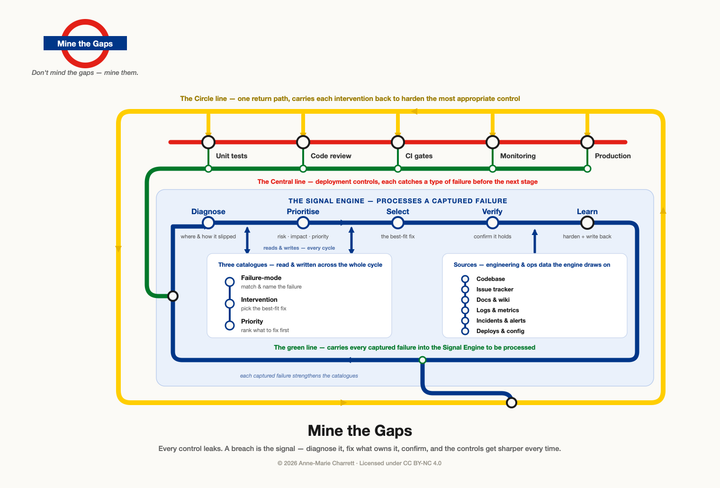
A stronger approach treats quality as a fundamental property of the software development process itself. This starts by involving your testing team from the very beginning—before a single line of code is written. Their perspective should shape requirements, architecture, and the very definition of "done."Encourage early conversations around testability: How will this feature be validated? What risks might we be introducing? Define testing strategies that span all levels of your stack—unit, integration, end-to-end, and exploratory. Plan for observability, monitoring, and failure recovery just as you would plan for feature development. Hold pre-mortems to uncover potential pitfalls in advance and strategize around them.
Leadership's Role in Quality Culture
If you are a leader, it is your job to create a culture where quality is not an afterthought but a shared responsibility. Open the door to transparent conversations around trade-offs. Yes, technical debt is inevitable. But if we treat it with intention and plan for it proactively, we can reduce its impact over time. Ultimately, a quality-first mindset enables teams to build software that is not only more stable and maintainable but also more aligned with business goals. It's a shift from reactive to proactive, from siloed ownership to shared commitment, laying the foundation for lasting success.
Got a decision to make, a conversation to prep, or a move to work out?
Drop in the real situation. KYM reads it through the Handbook's frameworks and gives you a move you can try.
Open Know Your Move →

Comments ()