Boost your engineering capability with this growth-focused framework

This article extends and references the work of two previous publications in this series. Namely ‘Accelerate your quality culture by identifying your engineering capability needs’ (the Capability phase) and ‘Build a culture of learning by amplifying team wins’ (the Growth phase). While not essential it might be helpful to have a read of those articles first as they provide practical examples of applying this framework in the two phases.
In this article, we focus on the complete framework and in particular the mechanisms that bind the two phases of Capability and Growth together.

The model provides guiding principles and a framework for growing the technical capability of an engineering department.
The model aims to foster a culture where teams can learn, experiment, and grow together while sharing their success with others.
How can this framework help?

- There can be lots of moving parts in an engineering department. This framework helps aid discussions and help build a culture where it no longer becomes necessary.
- It is holistic in its approach in that it doesn’t prescribe particular practices. Instead, it provides a framework for a team or a department to enable them to collectively scale the skills they are good at and facilitate the need to learn and develop at pace.
- It promotes practices that can help reduce the effects of siloing knowledge and information that can often occur in large organisations.
- It can catalyse an environment, a culture, where we can incorporate learning and growth into our work.
- The heart of this model is one team. However, it's designed to amplify and scale across multiple teams and departments.
Exploring the framework in more detail
This model is a decision-making tool to help you focus on key capabilities and the steps required to grow those capabilities.
By following the steps in this model, you can take your thinking through the key dimensions that might impact your overall engineering capability plan.
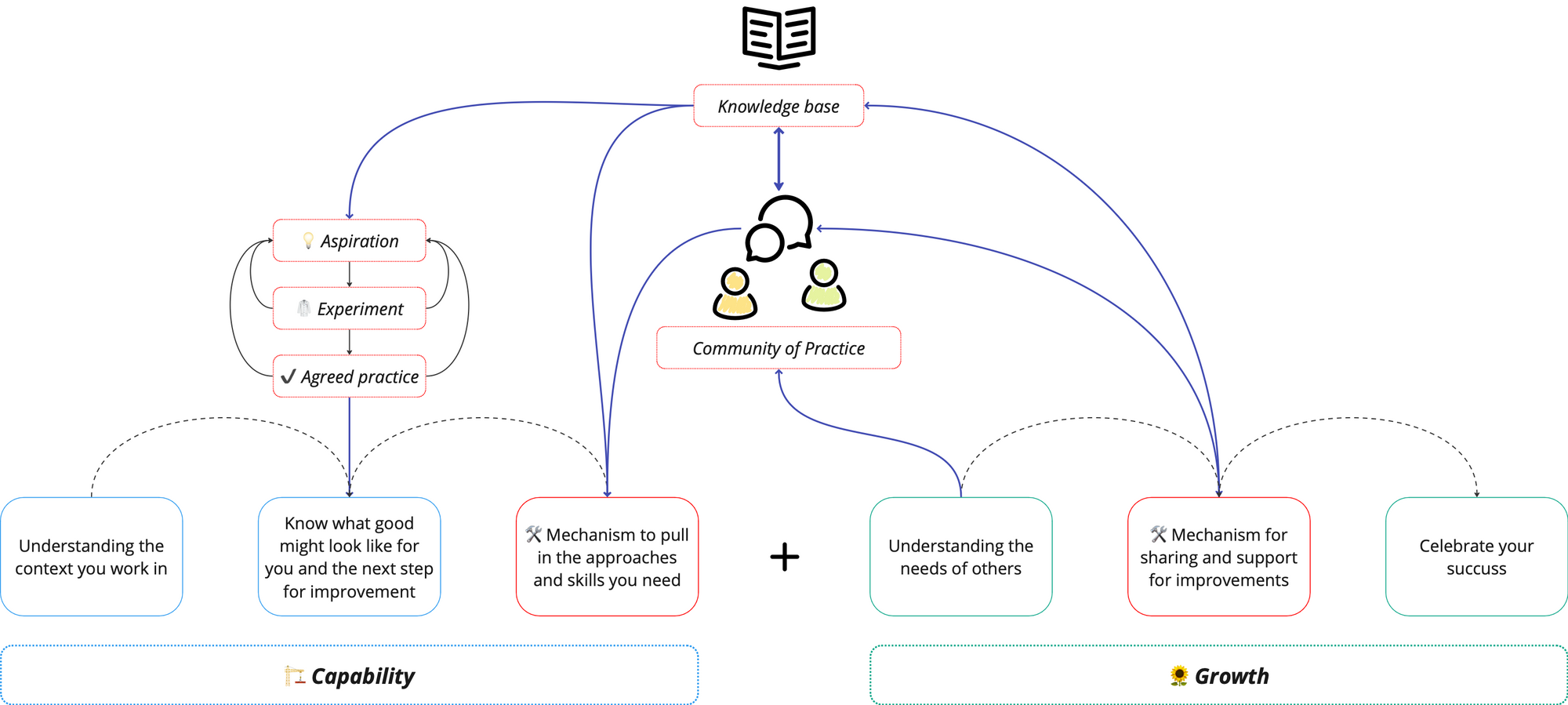
The following sections will explore these steps in more detail and provide ideas and guidance on the supporting mechanisms that tie them together.
🏗️ Understanding the context you work in
The work a team does and how they operate can influence what good looks like for them. Exploring and understanding this is essential as it impacts everything that follows.
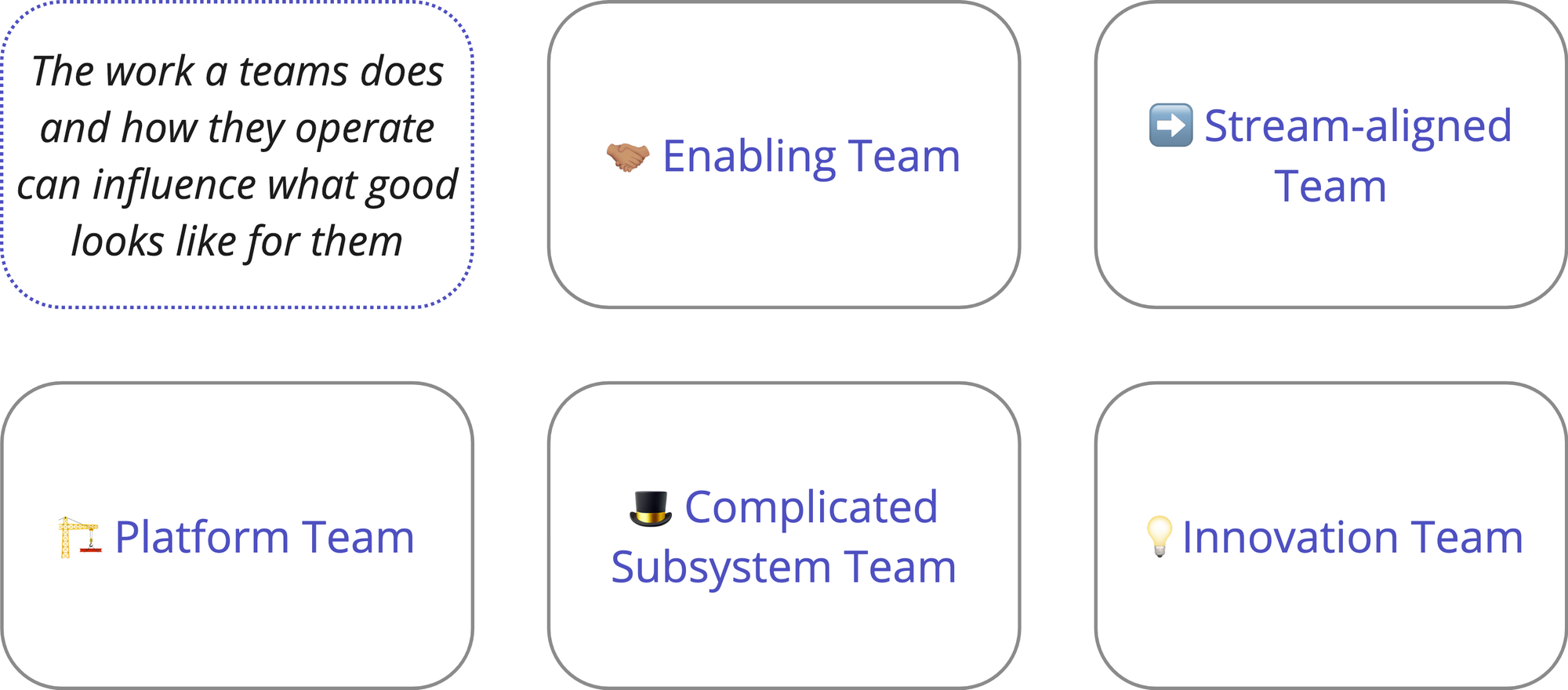
There will likely be common themes independent of your work and how you operate. Concentrating on these and the differences will make it easier during the Growth phase.
🏗️ Know what good might look like for you and the next step for improvement
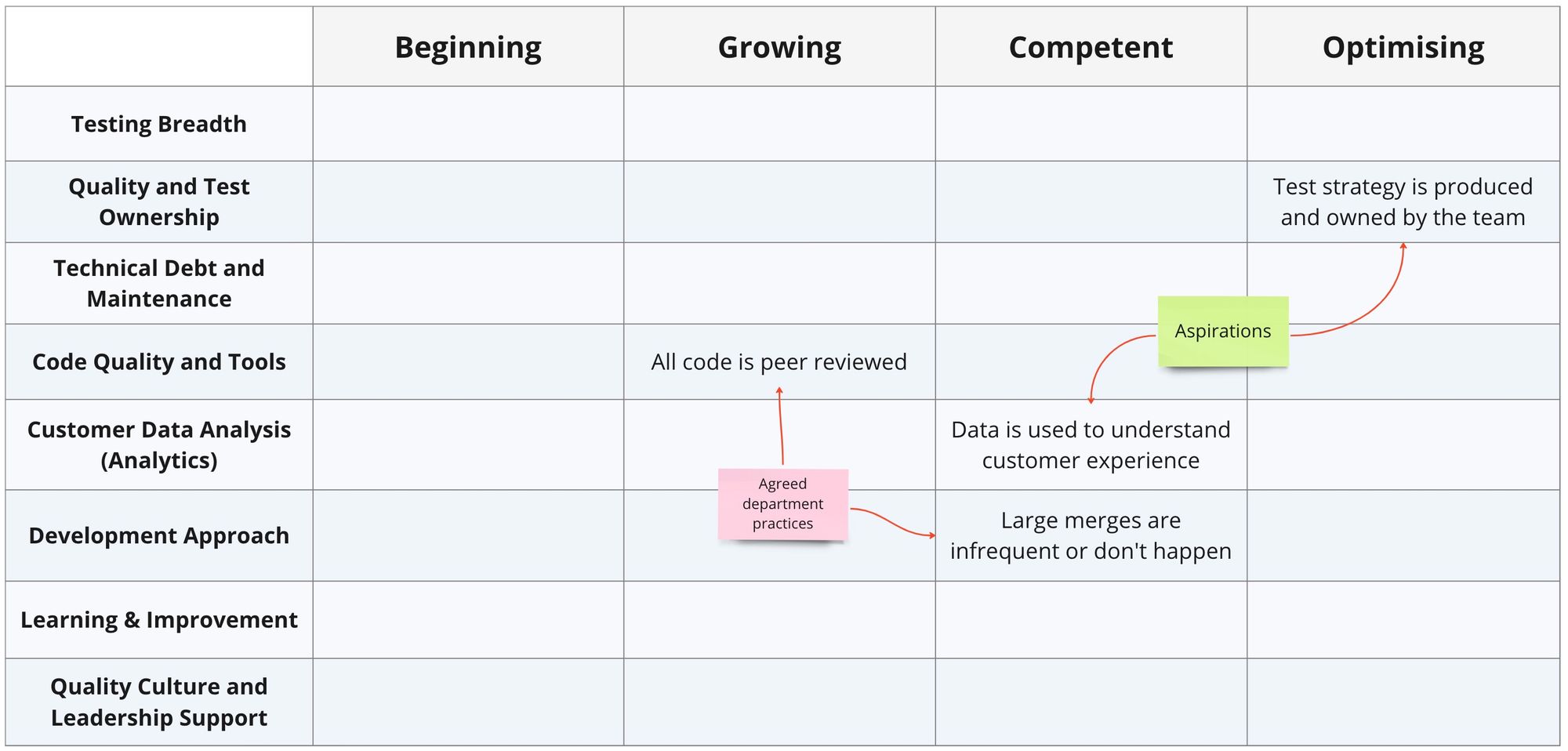
Inspiration of what good looks like might take several forms. Perhaps you have a Team Charter (or Canvas), or perhaps your company has a Technology Radar (covering Techniques, Tools, Platforms, and Frameworks) that you can draw from. Maybe a direction has been set related to one, or all, of the categories by senior management, staff engineers, architects, agile coaches, etc.
Other such examples include, but are not limited to;
- Departmental engineering practices and standards
- Team agreements on ways of working
- A development framework such as Scrum, Kanban, Extreme programming (XP), etc.
The article ‘Accelerate your quality culture by identifying your engineering capability needs’ provides a framework where you can explore and detail what good looks like for you and your team. It complements your existing material on what good looks and is a mixture of agreed company software practices and team aspirations for improvement. It also helps to define the next step in your journey which often isn’t part of engineering guidelines and practices.
When looking to improve, start with an Aspiration. This aspiration will be informed based on the work you did around knowing what good looks like.
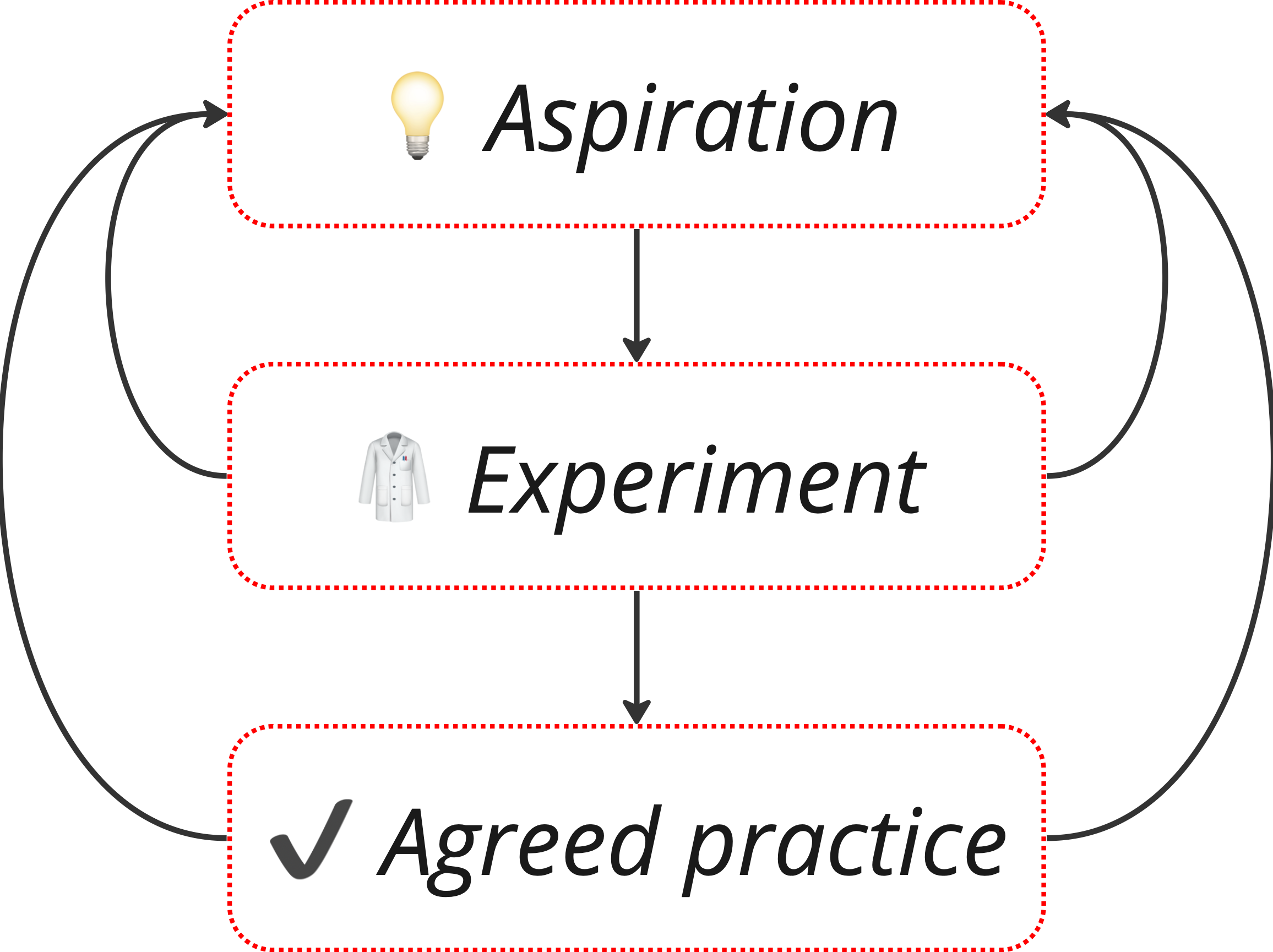
Next, propose an Experiment that you can run in your team that helps work towards this aspiration. Ideally, one experiment at a time so you can measure the benefit.
Over time, and assuming success, the experiment might promote itself into an Agreed Practice for your team and maybe, also for your department.
If unsure where to start, head to Accelerate your quality culture by identifying your engineering capability needs for practical help.
🛠️ A systematic engineering-wide mechanism to pull in the skills you need and the support for growth and sharing
Without a deliberate mechanism that actively supports and enables both the Capability and the Growth parts of the framework, you are largely leaving success to chance. You don’t have to implement it in the way described here but it is vital to take the time to ensure you have something in place.
An additional outcome is the supporting mechanisms needed to make the model successful help to promote and build practices that by themselves have many additional benefits. One such mechanism is Communities of Practices.
Central to this framework are two supporting systematic engineering-wide approaches;
- A Community of Practice that can offer experienced-based support and guidance around said experiments, approaches, technical knowledge and practices. This serves as a place for teams to promote their good practices while supporting other teams to pull said practices into their way of working.
- A single repository of engineering knowledge that details the experiments and successful ways of working from various teams. By doing so, we start to create a library of good practices and technical abilities categorised according to the department or business need. This enables and makes it easier for, all teams to pull from these groups of practices when they identify an area they would like to improve in.
Having these same systematic engineering-wide mechanisms supporting both phases (Capability and Growth) of the framework makes it easier to scale, reduces complexity, increases the adoption of good practices, and helps promote a learning and growth culture.
🌻 Understanding the needs of others
There are many formats for teams to celebrate success and ways of working. The approach described in the article ‘Build a culture of learning by amplifying team wins’ takes the additional step of thinking where practice could be shared and, importantly, attempts to tie that back to the department or business's collective learning and development goals. In this way, sharing becomes a deliberate act targeting the needs of others and the business.
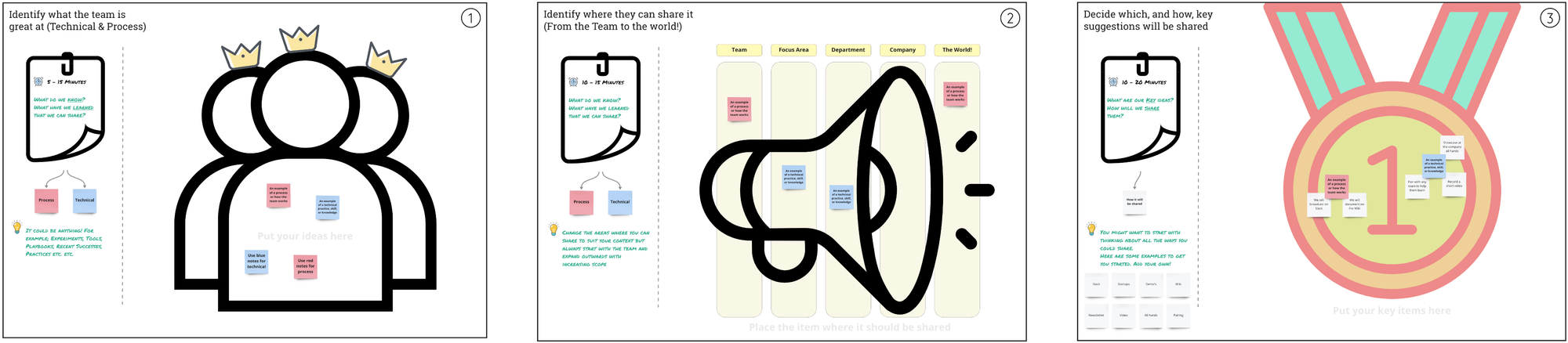
The key thing to remember is that sharing becomes a deliberate act targeting the needs of others and for that to be successful you must know what these needs are.
Communities of Practice can be fundamental in understanding these needs. Simply sharing without thinking of the needs of others won’t be enough.
If unsure where to start, head to Build a culture of learning by amplifying team wins for practical help.
🌻 Celebrate your success
Celebrating your success will always be important, but it brings additional benefits in the Engineering Capability Model context.
- It can generate excitement and engagement in other teams
- It can help promote cross-team collaboration
- It can support the mechanisms for sharing and engagement in a Community of Practice
Making the celebration a key part of the model puts people and teams at the forefront.
Where should you start?
While the model flows left to right starting at ‘Understanding the context you work in’, it doesn’t always need to start at the beginning. It's a cyclic loop so you can start anywhere though I’d suggest you take the time to understand the model first.
You also don’t need to always start with the whole model. I like introducing the Growth part first and then building on top of that. This is often much more comfortable for teams that likely already have a culture of reflection and sharing. In this regard, the workshop and structure described in the article ‘Build a culture of learning by amplifying team wins’ can be completely standalone. By starting with Growth first, you can build experimentation, learning, collaboration, and sharing patterns that make the Capability part much easier.
Alternatively, if you have Communities of Practice that want to define what good looks like for them and their members then a good starting point will be within the Capability part.
Consider starting with a single team first, assuming there is no pressing need to apply this to the whole department in one go. This allows you to refine the model to suit your context, have examples you can share with others, and build champions in the team to help spread the message.
What’s in it for you and your team?
As a Quality Coach introducing this to a team, you might want to convey what they will get out of this personally.
- You, and your team, have the potential to be at the centre of improving engineering excellence across your company.
- It can provide a common approach for championing what makes you and your team unique.
- As this is a ‘pull’, and not ‘push’ model, you can choose how and what knowledge your team needs and when they want it.
- It promotes team autonomy, while also providing guidance and suggestions for you to run with.
Frameworks are great, but what matters is you

The framework isn’t important, it is a tool to enable you to think about the complex nature of building a culture of continuous improvement and growth within your team or department.
The framework isn’t as important as actually starting something. It's great as a tool to guide, support, and facilitate but without the action that follows it's largely ineffective.
Start small, run an experiment, share your success and it's surprising just how quickly things can change.
The framework isn’t important, you are 😃
Got a decision to make, a conversation to prep, or a move to work out?
Drop in the real situation. KYM reads it through the Handbook's frameworks and gives you a move you can try.
Open Know Your Move →


Comments ()